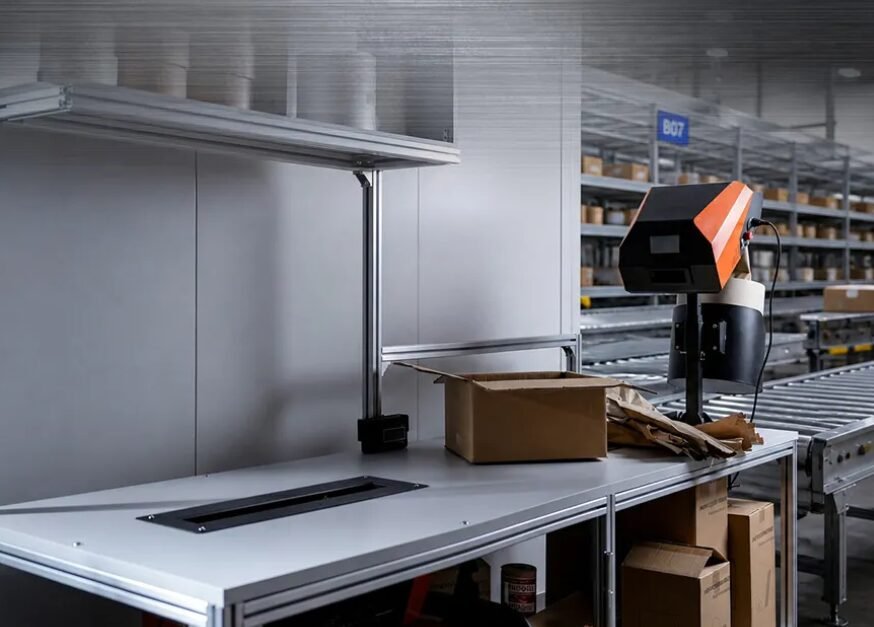
A water activated tape machine is one of the few packaging purchases where the specification sheet tells you almost nothing about whether it will work in your building. Two warehouses can buy the same model, and one will report a smooth transition away from plastic tape while the other quietly returns to tape guns within a month. The difference is rarely the machine itself.
What follows is a practical account of where that difference comes from — the factors that actually determine outcomes — based on working with water-activated sealing systems across fulfillment, third-party logistics, and export packing environments.
The mechanism, briefly, and why it drives every other decision
A water activated tape machine feeds gummed kraft paper tape, applies water to a starch-based adhesive, and cuts the strip to length. The adhesive activates on contact with water and bonds into the surface fibers of corrugated board as it dries. Once cured, the seal cannot be opened and reclosed without visible damage to the carton. That is a genuine security property, and it is the main reason sectors handling electronics, pharmaceuticals, and regulated goods specify this format. The secondary reason is recyclability: tape and carton share one paper stream, so the whole package can be processed together — a useful position for brands facing packaging waste obligations in Europe and North America.
Because the bond depends on water, everything that matters downstream relates to moisture control. That single fact should shape how a buyer evaluates any model.
Failure mode one: wetting that is not consistent
The most common cause of dissatisfaction is under-wetting. The tape appears to adhere at the moment of application, then lifts at carton corners a day or two later — often after the shipment has left the building, which makes diagnosis difficult and blame easy to misplace.
Causes are mundane: a moistening brush carrying dried starch, water that never reached temperature, or a brush that does not contact the full tape width evenly. Prevention is equally mundane but has to be habitual. Drain and rinse the water tank at the end of each shift, wipe the brush, and check the blade weekly. A heated tank with roughly 1-liter capacity keeps activation steady through a shift without constant refilling, and filtered water reduces mineral buildup where supply is hard. Buyers in hard-water regions should treat filtration as a requirement rather than an accessory.
Failure mode two: capacity mismatched to the actual rhythm
Buying above the station’s pace is the second recurring error. Broadly:
Manual lever dispensers such as the NT-800 suit operations sealing under roughly 100 cartons daily. No power, portable between stations, direct operator control.
Automatic electric models — the NT-AT 3.0 is one example — justify their cost once a team consistently seals several hundred cartons daily, where preset lengths and a heated tank remove the measure-and-cut step from every box. Units operating below 70 dB are easier to place on a shared floor.
Sensor-operated dispensers dispense tape when a hand or carton passes the sensor, which suits high-throughput lines and reduces contact with shared surfaces. Dispensing speeds around 60 m/min are achievable on some units, though real output depends on tape width, carton size, and how the station is laid out.
Handheld units remain correct for mobile packing and field service work.
A machine bought above the station’s rhythm often ends up switched off, because loading tape and managing the water tank takes longer than sealing a handful of boxes by hand. The reverse error — a manual dispenser on a line that needs automation — shows up as a permanent queue at the sealing point.
Failure mode three: tape the machine was not set up for
A water activated tape machine is only as good as the tape paired with it. Confirm supported roll width and diameter, then run a full roll of your intended kraft tape through the machine, not just the sample. Wetting problems frequently appear partway through a roll rather than at the start, and tape stored in humid warehouses behaves differently from tape tested in a dry office — a distinction that matters in coastal or tropical operations.
Sourcing dispensers and compatible water-activated kraft tape from one supplier simplifies this matching considerably. Airpowerpak (YJNPACK) supports both, along with OEM/ODM customization such as logo printing, body color, and function adjustments for distributors building a product range for resale.
Tape length accuracy as a cost line
Tape waste is rarely measured and therefore rarely managed. Machines with adjustable cut lengths — commonly spanning roughly 15 cm to 210 cm — standardize usage per carton size. On a line sealing several hundred cartons daily, trimming even a modest excess per strip compounds over a year. A tape length detector that measures a carton and calculates the optimal strip suits mixed-box operations; for uniform cartons, preset buttons are sufficient and cheaper.
What to ask before committing
Useful supplier questions go beyond model numbers: which roll widths and diameters are supported, and can I test with my own tape? What is the noise level under load? How are blades replaced, and are spares stocked? For distributors, what OEM/ODM options exist and what minimum quantities apply? Warranty and technical support terms matter more for equipment sold on to end users than for equipment kept in-house.
Where the machine fits best
Water activated systems deliver the most value in e-commerce fulfillment, third-party logistics warehouses with multiple packing stations, export packing where tamper evidence is specified, and cold-chain operations where plastic tape can lose adhesion at low temperatures. For operations sealing a handful of boxes weekly, a handheld dispenser is sufficient and automation is overcapitalization.
The most dependable selection method remains a trial on your own carton mix: run a machine through a normal shift and watch where operators hesitate, where tape is reapplied, and what the cartons look like the next morning. Those observations answer the cost question more honestly than any comparison table.
What You Need to Know
- Water activated tape machines can have varying performance outcomes in different warehouse settings, often due to factors unrelated to the machine model itself.
- The adhesive of water activated tape is activated by moisture, making moisture control critical to achieve a consistent bond.
- Common issues with wetting include under-wetting due to factors like a dirty brush or inadequate water temperature, which can lead to tape failure after shipment.
- Matching the tape machine’s capacity to the actual sealing rhythm of an operation is essential to avoid inefficiencies, such as having an overly powerful machine to seal a low volume of boxes.
- The choice of tape is vital, as tape stored in different environmental conditions can affect performance and compatibility with the machine.
- Questions to ask suppliers before purchasing a water activated tape machine should include specifications for supported roll widths and the ability to test with your own tape.